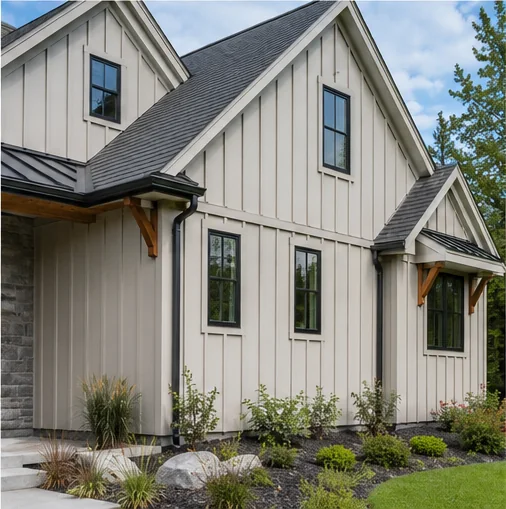
two story
A two-story home gives you the most living space for your lot, which is exactly why they fill so many of Savage's subdivisions built from the 1990s th
A two-story home gives you the most living space for your lot, which is exactly why they fill so many of Savage's subdivisions built from the 1990s through the 2010s. But stacking living space vertically also stacks the inspection concerns: every system has to travel further, every load path runs deeper, and small issues at the top of the house can quietly cause damage at the bottom. Add Savage's particular setting, perched along the Minnesota River bluffs in Scott County, and a two-story inspection here has to account for grading, drainage, and radon in ways a flat-lot rambler never would. Our inspections are thorough, honest, and written in plain English, with the full report delivered within 24 hours so you have time to act before deadlines.
Why a two-story home in Savage inspects differently
In a single-story house, almost everything is within easy reach. In a two-story, the structure has to carry the weight of an entire additional floor, plus the roof, down through the walls and into the foundation. That means more emphasis on the load path: are the upstairs walls actually stacked over the framing below them, or were they shifted during a remodel? Is there visible deflection in floors or sagging at long spans over the living room or great room? Many of Savage's two-story homes were built quickly during the metro's southwest growth boom, and we routinely look for the small framing and finish shortcuts that come with fast construction. We also pay close attention to how the two floors connect: stair structure, railings and baluster spacing, and the headers over the wide openings that newer open-concept floor plans favor.
Bluff grading, drainage, and the wet basement risk
Savage sits along the Minnesota River and its bluffs, and the terrain through much of the city slopes. On a sloped or graded lot, water management becomes the single most important thing a two-story home gets right or wrong, because that tall structure shedding rain and snowmelt sends a lot of water to the ground around a foundation that may already sit on cut-and-fill grading from when the subdivision was developed. We check that the final grade still slopes away from the house, that downspouts carry water well past the foundation rather than dumping it at the corners, and that window wells and walkout or lookout basements are draining as intended. Settling fill, negative grading, and clogged drainage are some of the most common and most fixable reasons a Savage basement gets wet.
Sump pumps and drain tile
Because of the soils and the water table near the river valley, many Savage homes rely on an interior drain tile system feeding a sump pit and pump. On a two-story home this matters even more, since a larger roof footprint can mean more water arriving at the foundation during a heavy rain. We test the sump pump where it is safe to do so, look for a functioning check valve, and note whether there is a battery backup or any backup at all, since a pump that fails during a spring storm or a power outage is a flooded basement waiting to happen. We also look for staining, efflorescence, or past patching on basement walls and floors that hint at water that got in before the system was working the way it should.
Elevated Scott County radon
Radon is a real and well-documented concern across Scott County, and Minnesota as a whole tests high for it. Radon is a naturally occurring gas that seeps up from the soil, and homes here frequently test above the action level the EPA recommends acting on. A two-story home does not change how radon enters, it still comes up through the lowest level, but the finished or daily-use basements common in these homes mean people spend real time in the space where radon concentrates. If the home already has a mitigation system, we look at whether it appears to be installed and running properly. If it does not, we will talk with you about adding a radon test so you know where the home actually stands rather than guessing.
Newer-build flashing and grading defects
It is a common misconception that a newer home is a problem-free home. Many of Savage's two-story houses are recent enough to look pristine while hiding the installation defects that show up in fast-built subdivisions. The classics we find are flashing related: missing or poorly integrated kick-out flashing where a roof edge meets a sidewall, step flashing done wrong along the taller wall sections a two-story creates, and deck ledger flashing that lets water track behind the siding. On the ground, we frequently see grading that was never finished correctly after construction, with backfill that has settled against the foundation. Caught early, these are inexpensive fixes. Left alone, they are the starting point for rot, mold, and structural repairs.
The systems that have to travel two floors
Mechanical and plumbing systems work harder in a two-story home. Heating and cooling have to push conditioned air up to the second floor, so we look for whether the upstairs bedrooms are actually comfortable or whether the system was undersized or poorly ducted, which is a common complaint in these homes. Plumbing supply pressure and drainage both have to climb and descend further, so we watch for slow drains, water-hammer, and any signs of past leaks at upstairs bathrooms that may have stained ceilings below. We also check that bathroom and laundry exhaust fans on the upper level actually vent to the exterior rather than into the attic, since trapped moisture up high is a frequent and quiet source of attic mold and sheathing damage in Minnesota's climate.
What we watch for
- Load path and framing: upper walls stacked over lower framing, floor deflection, and headers over wide open-concept spans
- Final grade sloping away from the foundation on Savage's bluff and cut-and-fill lots
- Downspout and gutter discharge carried well past the foundation rather than at the corners
- Sump pump operation, check valve, and whether any battery or backup exists
- Basement walls and floors checked for staining, efflorescence, and past water intrusion
- Radon: existing mitigation system condition, or a recommendation to test in this high-radon county
- Roof and wall flashing: kick-out, step, and deck ledger flashing on the taller two-story walls
- Heating and cooling reaching the second floor comfortably, with balanced ductwork
- Upstairs bath and laundry exhaust fans venting fully to the exterior, not the attic
Buying or selling a two-story home in Savage? Get a clear, honest inspection with your full report in 24 hours. Call us to schedule, or build a free instant quote online in about a minute, no obligation. An InterNACHI Master Inspector will walk the home from the bluff-side grading to the second-floor attic so you know exactly what you are getting.
Get Your Instant QuoteMore by type.
See your price in under a minute.
Build your quote and book your Savage-area inspection online — or call (952) 583-8608.