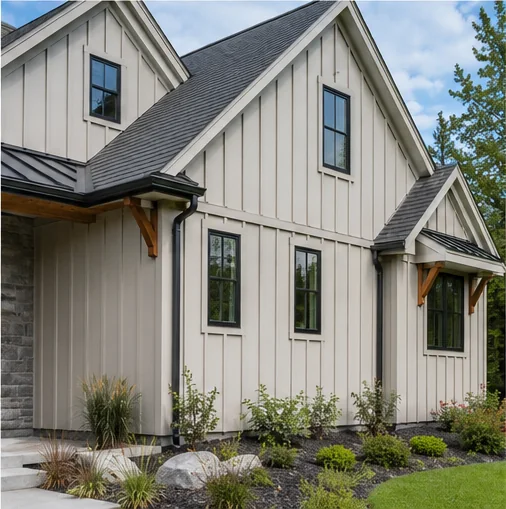
split level
Split-level homes are one of the most distinctive housing types you will find in Savage and across the southwest Twin Cities metro. Instead of stackin
Split-level homes are one of the most distinctive housing types you will find in Savage and across the southwest Twin Cities metro. Instead of stacking floors in one tall box, a split-level breaks living space into staggered half-levels connected by short runs of stairs, with one level set partially below the surrounding grade. That single design choice changes almost everything about how the house should be inspected. The lower level is not a utility basement tucked out of sight; it is finished, occupied living space, often holding bedrooms and a family room. When that space sits partly underground on Savage's varied soils near the Minnesota River bluffs, the questions a buyer should be asking shift in important ways. Our inspections of split-level homes in Savage focus on the points where this layout is genuinely different from a rambler or a two-story, rather than repeating a generic checklist. Below are the concerns we pay the closest attention to, written in plain English so you understand what we are looking at and why it matters before you buy.
Below-grade living space and Scott County radon
The defining feature of a split-level is that people actually live in the partially buried lower level. In a typical rambler the basement may be a workshop or storage, but in a split-level that same below-grade zone is frequently where the kids sleep and the family gathers in the evening. Scott County sits in a part of Minnesota with elevated radon potential, and radon is a soil gas that enters through the lowest level of a home. Because a split-level puts finished bedrooms and a family room down at that level, the amount of time people spend in the exposure zone is higher than in many other home types. We note radon-relevant conditions during the inspection, such as the condition of the slab, visible cracks, sump pit covers, and any existing mitigation system, and we will always recommend an independent radon test so you have real numbers before closing. We do not guess at levels or quote statistics; we point you toward a proper measurement.
Egress windows and window wells in lower-level bedrooms
Because lower-level bedrooms in a split-level are below grade, they depend on egress windows and window wells to provide a safe second way out in an emergency. This is a safety check that simply does not apply the same way to above-grade bedrooms in other home types. We look at whether bedroom windows on the lower level meet the basic intent of egress, whether the wells are sized and constructed to allow someone to climb out, and just as importantly whether those wells drain. A window well that holds water is a double problem in Savage: it threatens the sleeping space below grade with intrusion, and it can undermine the egress the room is supposed to provide. We flag missing or undersized egress, wells that lack proper drainage or covers, and any signs that water has been pooling against the lower-level wall.
Foundation step, grade junction, and bluff drainage
Savage's terrain rolls down toward the Minnesota River, and lots near the bluffs can have meaningful slope and mixed soils. The split-level's lower level meets the ground at a point partway up the foundation, creating a grade junction and an interior foundation step that are natural places for water to find its way in. We inspect how the soil is graded around this lower level, whether the ground slopes away from the house as it should, and how gutters and downspouts move roof water away from the buried wall. On sloped or bluff-adjacent lots, water that is allowed to run toward the lower level can saturate the soil beside finished living space. We look closely at the visible foundation, the slab-to-wall junction, and any staining, efflorescence, or patching that suggests water has been managing the home rather than the home managing the water.
Sump pumps and drain tile protecting the lower level
Many split-levels in this area rely on a sump pump and perimeter drain tile to keep groundwater away from the finished lower level. When that level holds bedrooms and a family room, a working sump system is not a luxury, it is what keeps the carpet dry and the air healthy. We test the sump pump where we can safely do so, look at how and where it discharges, and check that the discharge carries water well away from the foundation rather than dumping it right back against the bluff-side wall. We note the absence of a sump where the soils or layout suggest one would be prudent, signs of a pump that has failed or been replaced repeatedly, and discharge lines that loop back toward the house. A backup plan, such as a battery backup pump, is something we will discuss when the lower level is fully finished.
Zone temperature imbalance across the half-levels
A split-level stacks living space in staggered half-levels, and that geometry creates a comfort and systems issue that is genuinely specific to this home type. The buried lower level tends to run cool while the upper bedrooms run warm, and a single furnace and return-air layout has to fight that natural stratification. During the inspection we look at how the heating and cooling system is set up to serve the different levels, whether return-air registers are present on the lower level, and whether the ductwork appears sized and balanced for the split layout. Persistent hot-and-cold complaints in a split-level often trace back to return-air and zoning rather than a broken furnace. We describe what we observe so you understand whether comfort issues are a quick adjustment or a sign the system was never set up correctly for the stacked design.
What we watch for
- Radon-relevant conditions at the below-grade living level, with a recommendation for an independent radon test in Scott County
- Lower-level bedroom egress windows that meet the intent of a safe second exit
- Window wells that are properly sized, covered where appropriate, and draining rather than holding water
- Soil grading around the lower level that slopes water away from the buried foundation wall
- Gutters and downspouts directing roof water well clear of the bluff-side lower level
- Cracks, efflorescence, staining, or patching at the slab-to-wall junction and interior foundation step
- Sump pump operation and a discharge line that carries water well away from the home
- Return-air registers and duct balance serving the staggered half-levels
- Signs of past water intrusion in the finished lower level, including flooring, baseboards, and stored items
Buying a split-level in Savage? Make sure that below-grade living space is dry, safe, and healthy before you close. Call us at (952) 583-8608 to schedule your inspection, or build a free instant quote online in about a minute. We deliver a clear, photo-documented report within 24 hours so you can move forward with confidence.
Get Your Instant QuoteMore by type.
See your price in under a minute.
Build your quote and book your Savage-area inspection online — or call (952) 583-8608.