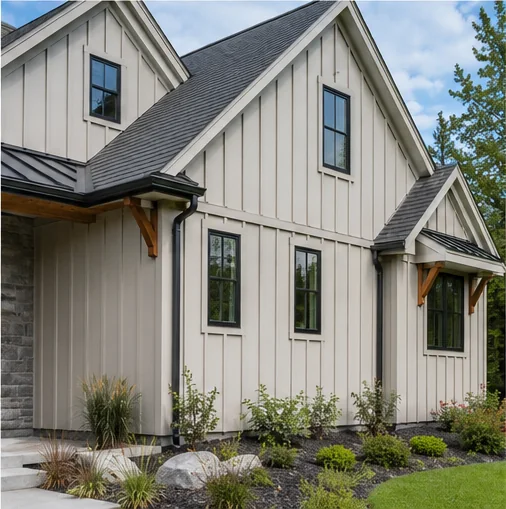
rambler
Ramblers, sometimes called ranch-style homes, are one of the most common single-level house types you will tour in Savage, especially across the subdi
Ramblers, sometimes called ranch-style homes, are one of the most common single-level house types you will tour in Savage, especially across the subdivisions that filled in north and west of Highway 13 between the 1990s and the 2010s. On paper a rambler is simple: everything important lives on one floor over a basement or slab. In practice, the way these homes sit on Savage's terrain, the way builders graded the lots as the city grew toward the Minnesota River bluffs, and the way newer-build details were flashed and finished all create a specific set of things worth checking before you buy. This page explains what we actually inspect on a Savage rambler and why it matters here, in plain English, with no inflated numbers and no within about 24 hours promises. Reports are delivered in 24 hours so you have time to read them carefully before your deadlines.
The basement and the long single-level footprint
A rambler spreads its living space horizontally, which means a long foundation wall and a large basement footprint relative to the floor area above. In Savage's newer subdivisions most ramblers sit on poured concrete foundations, and the things we look for are the things that show up after a few Minnesota freeze-thaw cycles: hairline shrinkage cracks versus active step or horizontal cracking, signs of seasonal water staining along the bottom of the wall, and whether the basement was finished in a way that hides the foundation from view. A finished lower level is common in these homes and can be a great feature, but it also means we are reading indirect clues, baseboard gaps, musty smells, efflorescence at unfinished mechanical areas, rather than seeing the bare wall. We tell you clearly where we could and could not see, so nothing is implied that we did not actually observe.
Bluff-edge grading, lot drainage, and where the water goes
Savage climbs from the Minnesota River valley up onto higher ground, and a lot of residential development sits on graded, filled, and re-contoured lots as the city built out toward the bluffs. On a single-level home the roof sheds a large volume of water to grade in a relatively small ground footprint, so lot grading matters more than people expect. We check that the soil slopes away from the foundation on all sides, that downspouts discharge well away from the wall rather than dumping at the corner, and that patios, stoops, and driveways have not settled back toward the house. On bluff-adjacent and walkout-style rambler lots we pay attention to how the back slope was built and whether surface water is being directed across or away from the foundation. This is descriptive observation of what we can see at the surface, not a geotechnical or slope-stability engineering opinion.
Sump pumps, drain tile, and the wet-season reality
Because so many Savage ramblers have full basements on graded subdivision lots, an interior sump basket with a pump is common and often essential. We test the sump pump where one is present, look at how the discharge line exits and where it terminates outside, and note whether a battery backup or secondary pump exists, since a single pump on a power-out spring storm is a known failure point. We also look for the telltale signs that drain tile or the sump system has been working hard: water lines in the basket, prior patch repairs, dehumidifier setups, and staining at the cold-joint where the slab meets the wall. None of this is automatically a defect, but a buyer should know whether the home is staying dry by design or by luck.
Elevated radon and why slab-on-grade single levels matter
Scott County sits in a part of Minnesota where elevated indoor radon is common, and the Minnesota Department of Health recommends testing every home regardless of age. A rambler's large ground-contact area, one big slab or basement floor under the entire living space, gives radon plenty of surface to enter through. Many newer Savage ramblers were built with passive radon-resistant rough-ins, a vent pipe stubbed up through the roof, and we look for whether that system is present, whether it was ever made active with a fan, and whether the labeling and routing look correct. If you want a measured result rather than an assumption, a radon test is the only way to know your number, and we will tell you honestly when a system is passive versus actively mitigating.
Newer-build flashing, roof-to-wall details, and exterior grading defects
Ramblers built in the subdivision era have long, low rooflines with lots of intersections, and the defects we find are usually about water management rather than dramatic structural problems. We look closely at kick-out flashing where a roof edge meets a sidewall, step flashing at chimneys and bump-outs, deck ledger attachment and flashing on the many walkout and patio-door decks these homes have, and caulk-and-trim failures on the broad south and west elevations that take Minnesota's sun and wind. On the ground we re-check that final grade was not left high against siding or stucco, a frequent newer-construction shortcut that traps moisture against the wall. These are the small, fixable items that, left alone, become the expensive ones.
What we watch for
- Foundation walls: shrinkage cracks versus active step or horizontal cracking, water staining low on the wall, and how much was hidden behind finished lower-level walls
- Lot grading that slopes back toward the foundation, settled patios and stoops, and downspouts discharging too close to the house
- Sump pump operation, discharge termination, and whether a backup pump or battery exists for spring storms
- Signs the drain-tile and sump system are working hard: water lines in the basket, prior patches, persistent dehumidifier use
- Radon vent system presence, passive versus active status, and correct routing, with a measured radon test recommended
- Kick-out and step flashing at roof-to-wall intersections on long, low rambler rooflines
- Deck ledger attachment and flashing on walkout and patio-door decks
- Final grade or mulch left high against siding and stucco on newer builds, trapping moisture at the wall
- Attic ventilation and insulation depth across the large single-level ceiling plane, including bath-fan venting to the exterior
Buying a rambler in Savage or anywhere in Scott County? Get a clear, honest, single-level inspection with photos and a plain-English report delivered in 24 hours. Call (952) 583-8608 to talk through your home, or build a free instant quote online in about a minute and pick a time that fits your closing.
Get Your Instant QuoteMore by type.
See your price in under a minute.
Build your quote and book your Savage-area inspection online — or call (952) 583-8608.