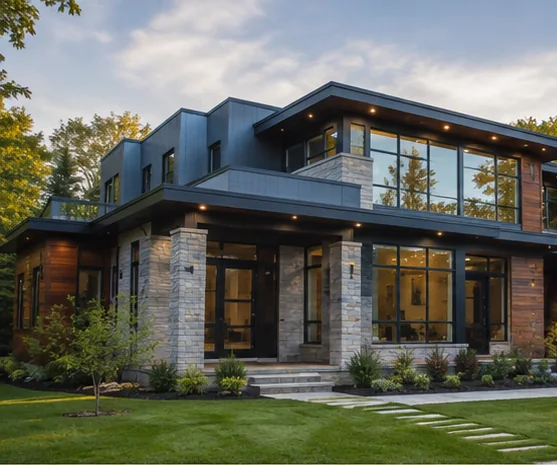
Radon in Scott County: A Savage Homeowner's Guide
Why Scott County radon levels matter, how testing works, and what mitigation involves.
If you own a home in Savage, radon is one of those invisible risks that's easy to ignore until a real estate transaction or a nagging cough forces the question. Scott County sits in a part of Minnesota where geology, soil, and decades of subdivision building combine to push indoor radon levels higher than many homeowners expect. This guide is written specifically for Savage and the surrounding Scott County communities along the Minnesota River bluffs. It explains why radon shows up here, how your home's age and construction affect it, what testing actually involves, and what to do if your numbers come back high. No scare tactics and no fabricated statistics, just plain, accurate information you can act on.
In this guide
Why Scott County Sits in a Higher-Radon ZoneHow Savage's 1990s-2010s Subdivisions Affect RadonBluff Grading, Drainage, and the Radon ConnectionSump Pumps, Drain Tile, and Radon Entry PointsTesting Your Savage Home the Right WayBeyond Radon: Newer-Construction Defects We See in SavageWhy Scott County Sits in a Higher-Radon Zone
Radon is a colorless, odorless radioactive gas produced when uranium in soil and rock breaks down. It seeps up through the ground and concentrates inside the lowest levels of homes. Minnesota as a whole runs higher than the national average, and Scott County is no exception. The Minnesota Department of Health classifies the great majority of the state, Scott County included, in its highest radon potential zone, meaning the average home here is more likely than not to test above the EPA action level of 4.0 picocuries per liter (pCi/L) at least once.
The reason is partly geological. The soils across Savage and the southwest metro, shaped by glacial deposits and the ancient Minnesota River valley, are rich in the kind of sediment that releases radon as it decays. The gas doesn't respect lot lines, neighborhood reputation, or how new your house is. Two homes next door to each other can test very differently depending on foundation cracks, soil moisture, and how the house draws air. That's why a neighbor's low result tells you almost nothing about your own home. The only way to know your level is to test the specific house you live in, ideally in the lowest livable level where families spend time.
How Savage's 1990s-2010s Subdivisions Affect Radon
Much of Savage's housing stock went up during the building boom of the 1990s through the 2010s, as cornfields and bluff-edge parcels were platted into subdivisions. These homes are generally well built and energy efficient, but newer construction carries its own radon story. Tighter building envelopes, better insulation, and modern weatherization mean less outdoor air leaks in to dilute whatever radon enters from below. A tight, efficient home can actually hold radon at higher concentrations than a drafty older one.
Many of these subdivision homes were built on poured-concrete basement foundations with sump systems and drain tile, which is exactly the configuration where radon finds an entry path. The gas moves through cracks, around plumbing penetrations, and up through the gap where a sump pit opens into the basement. Walkout and lookout designs common on the bluff-side lots add complexity because part of the foundation is below grade and part is exposed. The good news is that newer homes are generally easy and inexpensive to mitigate when needed, since the slab and sub-slab conditions are predictable. But age alone is never a reason to skip testing. A home built in 2008 can read just as high as one built in 1968.
Bluff Grading, Drainage, and the Radon Connection
Savage's defining feature is its position along the Minnesota River bluffs, and that topography matters for radon and for moisture management generally. Homes built into sloped, bluff-adjacent lots required significant grading during construction, and how that grading was done affects how water and soil gas move around the foundation for the life of the home.
When lots are cut into a slope, the disturbed and backfilled soil around the foundation is looser and more permeable than undisturbed ground. That backfill can become a preferential pathway for both groundwater and radon to travel toward the basement walls and slab. Poor final grading, where the ground slopes toward the house instead of away, compounds the problem by keeping soil saturated and pulling moisture against the foundation. Saturated soil and dry soil behave differently with radon, and the freeze-thaw cycling of Minnesota winters opens and closes micro-cracks in concrete that gas can exploit. During an inspection we look closely at grading, downspout extensions, and whether the bluff-side drainage was engineered to carry water away. These same conditions that drive radon entry also drive the wet-basement and foundation-movement issues that are common on graded bluff lots.
Sump Pumps, Drain Tile, and Radon Entry Points
Nearly every Savage basement has a sump pit, a sump pump, and a perimeter drain tile system, and these are essential for keeping water out in a high-water-table river valley. But the same network that channels water also gives radon a direct highway into the home. An open or loosely covered sump pit connects the interior air to the porous gravel and soil beneath the slab, and radon rises right through it.
The encouraging part is that this configuration also makes mitigation straightforward. The most common and effective radon fix, an active sub-slab depression system, uses a sealed pipe and a quiet inline fan to draw soil gas from beneath the slab and vent it above the roofline before it ever enters the house. In homes with drain tile and a sump, that existing gravel layer under the slab is often exactly what makes the system work efficiently, because the fan can pull from a well-connected sub-slab space. A sealed sump cover is frequently part of the solution. When we inspect a Savage home, we note whether the sump is sealed, whether the pit could double as a mitigation point, and whether any existing radon system is actually running and venting correctly rather than just installed and forgotten.
Testing Your Savage Home the Right Way
Testing is inexpensive, fast, and the only thing that turns guesswork into a real number. There are two main approaches. Short-term tests run from two to several days and are common during real estate transactions because of the timeline. Long-term tests run more than ninety days and give a more accurate picture of your year-round average, since radon levels swing with the seasons. In a Savage home, winter levels are often the highest of the year because the house is sealed tight and the warm interior air rises and pulls soil gas up through the foundation, the so-called stack effect.
For a trustworthy result, the test should sit in the lowest level you actually use, kept away from drafts, exterior doors, and direct sunlight, under closed-house conditions. If you're buying or selling, a professional measurement protects everyone and creates a documented record. If you're a current owner who has never tested, do it now and retest every few years, because levels change as the home settles, the soil moisture shifts, and cracks develop. The EPA action level is 4.0 pCi/L, but because no level of radon is truly risk-free, mitigation is often worth considering in the 2 to 4 range too, especially for families with young children or anyone using a finished basement daily.
Beyond Radon: Newer-Construction Defects We See in Savage
Radon rarely travels alone. The same Savage homes that need testing often share a cluster of newer-construction issues we routinely document. Flashing defects are a common one. On homes from the building-boom era, missing or poorly installed kick-out flashing where a roof meets a wall sends water into the wall cavity, and step flashing shortcuts around chimneys and dormers show up as hidden rot years later. These problems are quiet until they're expensive.
Grading defects, discussed earlier in the context of radon, also drive bulk water against foundations and into basements. Ice dams are another Savage reality. Long, snowy winters combined with under-insulated or poorly ventilated attics let heat escape, melt the snowpack, and refreeze at the eaves, backing water up under shingles and into ceilings. Walkout and lookout basements on bluff lots add deck ledger and exterior-wall waterproofing details that are easy to get wrong. None of these are reasons to panic, and most are very fixable when caught early. The point is that a thorough inspection in Savage looks at the whole system, soil gas, water, roof, and grading together, because in this geography and this housing stock they're connected. Treating radon as a standalone checkbox misses the larger moisture and air-movement story your home is telling.
Quick checklist
- Test your home for radon now if you never have, using the lowest level you actually live in, and retest every few years or after major foundation work.
- Run a long-term test (90+ days) for the truest year-round average, or a short-term test under closed-house conditions during a real estate transaction.
- Check that your sump pit has a sealed, gasketed cover rather than an open or loose lid.
- Confirm any existing radon mitigation fan is actually running and venting above the roofline, not just installed.
- Inspect final grading on bluff-side and backfilled lots so soil slopes away from the foundation, and extend all downspouts well past the backfill zone.
- Look for missing kick-out and step flashing where roofs meet walls, chimneys, and dormers.
- Address attic insulation and ventilation before winter to reduce ice dams at the eaves.
- Keep results above roughly 2 pCi/L in mind for mitigation if your family uses a finished basement daily, even below the 4.0 action level.
- Seal visible foundation cracks and slab penetrations that give soil gas and water an entry path.
- Schedule a professional inspection that evaluates radon entry, drainage, roof, and grading together rather than in isolation.
Radon and the moisture conditions that come with Savage's bluff-side, boom-era housing are very manageable once you know what your home is actually doing. The worst move is guessing. If you're buying, selling, or simply want to know where your home stands, we'll give you straight, documented answers, not a sales pitch. Call us to talk through your specific Savage or Scott County home, or build a free instant quote online in under a minute to see your options. Knowing your number is the easy part, and it starts within about 24 hours you decide to.
Get Your Instant QuoteSee your price in under a minute.
Build your quote and book your Savage-area inspection online — or call (952) 583-8608.