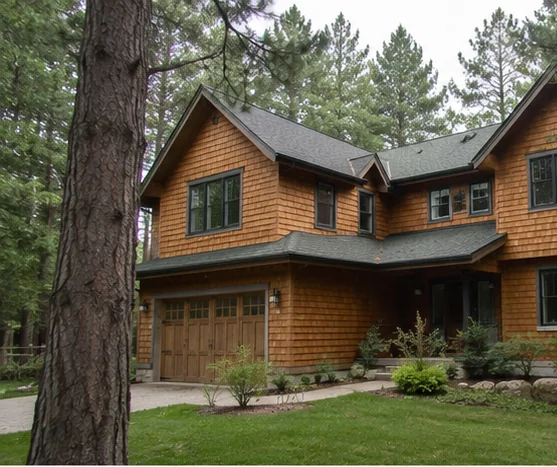
The Older-Home Buyer's Guide for Savage
What to watch for in Savage's pre-2000 housing stock — dated systems, roofs and panels.
Savage sits on the south bank of the Minnesota River in Scott County, and "older home" here usually means something very different than it does on the East Coast or in the older Minneapolis grid. The bulk of Savage's housing stock went up during the city's fast growth from the late 1980s through the 2010s, with pockets of earlier rambler and split-level neighborhoods closer to the historic riverfront and Highway 13. When buyers ask us to inspect an "older" Savage home, we're often looking at a 25-to-40-year-old subdivision house that has reached the age where original systems, grading, and waterproofing start telling on themselves. This guide walks through what actually shows up on inspections in Savage, why the Minnesota River bluffs and Scott County geology matter, and how to buy with your eyes open.
In this guide
What "Older" Really Means in SavageThe Minnesota River Bluffs: Grading, Drainage, and Lot PositionRadon: A Genuine Scott County ConcernSump Pumps, Drain Tile, and Wet BasementsNewer-Construction Defects: Flashing, Grading, and Builder ShortcutsMinnesota Winters: Ice Dams, Attics, and Aging MechanicalsWhat "Older" Really Means in Savage
Savage doesn't have the deep stock of 1900s-1940s housing you find in the Minneapolis or St. Paul core. The city grew up around the river and Highway 13, with a relatively small base of 1950s-1970s ramblers, split-levels, and split-entries near the older established areas, then exploded outward through the 1990s and 2000s with subdivisions toward Credit River and the southern edges of the city. So when you tour an "older home" in Savage, you're typically dealing with one of two profiles. The first is a genuine mid-century rambler or split where the concern is aging galvanized or cast-iron plumbing, original electrical panels, single-pane or early double-pane windows, and decades of grading changes. The second, far more common, is a 1990s-to-early-2010s subdivision house now hitting the age where builder-grade components fail on schedule: first-generation furnaces and water heaters, original asphalt shingles, builder-grade decks, and polybutylene or early PEX questions in the oldest examples. Knowing which profile you're buying changes what your inspector prioritizes, so tell us the year built and we'll calibrate the walkthrough accordingly.
The Minnesota River Bluffs: Grading, Drainage, and Lot Position
Savage's defining geographic feature is the Minnesota River and the bluff line that steps down toward the floodplain. Homes built on or near the bluffs, and the many subdivisions carved into the rolling terrain south of the river, sit on lots where water management is the single biggest long-term issue. We routinely see lots where the original builder grading has settled or been altered by landscaping, patios, and additions, so the soil now slopes toward the foundation instead of away from it. On bluff-adjacent and walkout lots, we look hard at how surface water moves across the property, whether downspout extensions actually carry water away, and whether retaining walls show signs of leaning, bowing, or failed drainage behind them. Heavy clay and silty soils common in Scott County hold water and exert seasonal pressure on foundation walls. During an inspection we check for horizontal cracking, step cracking at corners, efflorescence, and past water staining in the basement. None of this means a home is a bad buy; it means grading and drainage deserve real scrutiny, because correcting them after closing is far cheaper than repairing a chronically wet foundation later.
Radon: A Genuine Scott County Concern
Scott County, like most of the Twin Cities metro, sits in an area where elevated indoor radon is common. The Minnesota Department of Health classifies the entire state as high-risk, and a large share of Minnesota homes test above the EPA action level of 4.0 picocuries per liter. Savage's mix of basements, walkouts, and lookout lots means many homes have substantial below-grade living space where radon can accumulate. Newer Savage construction may already include passive radon-reduction rough-ins, but a passive system is not the same as a tested, working mitigation system, and a stub of pipe in the basement is no guarantee the home is below the action level. We strongly recommend a radon test on any Savage home regardless of age, and especially on older homes that predate radon-resistant construction practices. Mitigation, when needed, is a well-understood and relatively affordable fix involving a sub-slab suction pipe and fan. The point is to test first so you know what you're buying and can negotiate or budget accordingly rather than discovering the issue after you've moved in.
Sump Pumps, Drain Tile, and Wet Basements
Because of the clay soils, high water tables in low-lying areas, and the sheer amount of finished basement space in Savage homes, sump pumps and interior or exterior drain tile are a normal part of the picture here. On older homes we check whether the sump pump actually runs, whether the basin holds water and discharges properly, where the discharge line terminates, and whether that water is being dumped right back against the foundation. We look for a battery backup or water-powered backup, because Minnesota's heaviest rains and snowmelt often coincide with spring storms that can knock out power exactly when you need the pump most. In finished basements we look for the telltale signs of past intrusion: replaced lower drywall, fresh paint only along the base of walls, musty odors, warped baseboards, and efflorescence behind finishes. We can't see inside walls, but we can flag the patterns that warrant a question to the seller. A functioning sump and drain tile system is a feature, not a defect, but it needs to be maintained and tested, and a homebuyer should know it's there and plan for eventual pump replacement.
Newer-Construction Defects: Flashing, Grading, and Builder Shortcuts
It's a misconception that a 1995 or 2005 subdivision home is trouble-free because it's "newer." Production building during Savage's boom years moved fast, and certain defects show up again and again across these neighborhoods. Missing or improperly installed kick-out flashing where roofs meet walls is a classic, and it lets water run down behind siding and rot the sheathing over time. Step flashing at chimneys and dormers, and counterflashing at roof-to-wall intersections, are common weak points. We also see deck ledger boards that were nailed rather than properly lag-bolted and flashed, original grading that was never finished to slope away from the house, and shallow or undersized gutters on homes with large roof planes. Stucco and early manufactured-stone veneer installations from this era deserve a careful look for cracking and moisture staining at the base. None of these are reasons to walk away, but they are exactly the items a thorough inspection catches so you can prioritize repairs and avoid the slow, hidden water damage that turns a small fix into a structural one.
Minnesota Winters: Ice Dams, Attics, and Aging Mechanicals
Savage homes take a beating from Minnesota winters, and the older the home, the more the cumulative effects show. Ice dams form when heat escaping into a poorly insulated or under-ventilated attic melts snow that refreezes at the cold eaves, backing water up under shingles and into walls and ceilings. On older Savage homes we look closely at attic insulation depth, the condition of soffit and ridge ventilation, bathroom and kitchen exhaust fans venting properly to the exterior rather than into the attic, and stains on the underside of the roof deck that hint at past ice damming or condensation. We also pay attention to the age and condition of furnaces, water heaters, and air conditioners, since a 25-year-old home may be on its second set of mechanicals or, worse, limping along on the originals well past their expected life. Cracked heat exchangers, rusted water heater tanks, and aging AC compressors are budget items you want identified before closing. Honest reporting on the remaining life of these systems helps you plan the first few years of ownership without unwelcome surprises in January.
Quick checklist
- Confirm the year built and ask whether the home is an original mid-century rambler/split or a 1990s-2010s subdivision build, since each has different priority items
- Walk the lot after rain or check grading: soil should slope away from the foundation, and downspouts should discharge several feet out, not against the wall
- On bluff, walkout, or lookout lots, inspect retaining walls and surface drainage for leaning, bowing, or pooling water
- Schedule a radon test regardless of age, and don't assume a passive radon pipe means the home is below the EPA action level
- Test the sump pump, locate the discharge line, and ask about battery or water-powered backup before spring storm season
- Check the basement for signs of past water: efflorescence, replaced lower drywall, fresh base-of-wall paint, musty odors, and warped baseboards
- Have the inspector verify roof-to-wall and chimney flashing, kick-out flashing, and deck ledger attachment on newer-construction homes
- Confirm attic insulation depth and ventilation, and that bath/kitchen fans vent outside, to reduce ice-dam risk
- Note the age and condition of the furnace, water heater, and AC, and budget for replacement of anything near end of life
- Ask the seller directly about any history of basement water, sump failures, or ice-dam leaks and get answers in writing
Buying an older home in Savage is a smart move when you know exactly what you're getting, and that's what a thorough, honest inspection delivers. We inspect throughout Savage, Prior Lake, Shakopee, and the rest of Scott County, and we'll give you plain-English answers on grading, drainage, radon, sump systems, and aging mechanicals so you can negotiate and budget with confidence. Call us to talk through your specific home, or build a free instant quote online in about a minute and lock in your inspection before your contingency deadline.
Get Your Instant QuoteSee your price in under a minute.
Build your quote and book your Savage-area inspection online — or call (952) 583-8608.