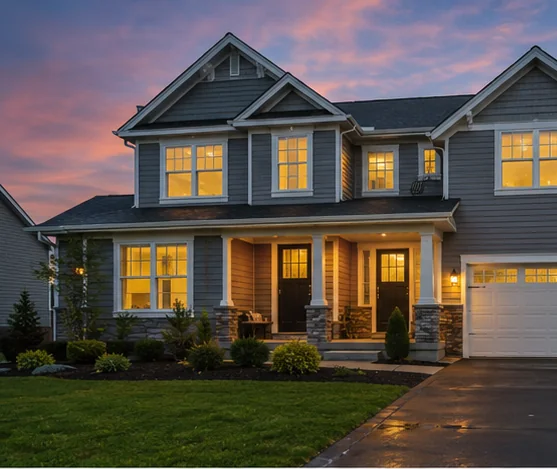
New Construction Buyer's Guide for Savage
Why an independent inspection matters even on a brand-new Savage build, and when to do it.
Buying new construction in Savage feels like it should be the safe choice. The carpet is clean, the furnace has never run a winter, and the builder hands you a warranty. But new does not mean flawless. Savage sits on the bluffs and floodplain shelves above the Minnesota River in Scott County, and that terrain shapes how homes here drain, settle, and shed water. Whether you are closing on a recently completed home in one of the newer developments off County Road 42, Highway 13, or up toward the Credit River neighborhoods, or buying a five-to-fifteen-year-old home built during Savage's big growth wave, the same local pressures apply. This guide walks through what genuinely goes wrong on newer Savage homes, why the river-bluff geography matters more than the build date, and how to inspect smart before you sign. It is written in plain English, with ranges instead of invented price tags, so you can make a confident decision and not just trust the shine.
In this guide
Why "New" Still Needs an Inspection in SavageThe Minnesota River Bluffs: Grading, Drainage, and Lot PositionWet Basements, Sump Pumps, and Drain TileRadon: Take Scott County SeriouslyRoofs, Flashing, and Minnesota Ice DamsThe First-Year Walk-Through and Builder Warranty WindowWhy "New" Still Needs an Inspection in Savage
Savage grew fast. Through the late 1990s and into the 2010s, subdivisions filled in across the city as the southwest metro boomed, and crews framed homes quickly to keep pace with demand. Speed is not the enemy of quality, but it is the enemy of detail, and the defects that show up most often on newer Savage homes are detail defects: a kicked-out piece of step flashing, a downspout that dumps against the foundation, a bath fan vented into the attic instead of through the roof, a missing kickout at a roof-to-wall junction. None of those stop you from moving in. All of them quietly cause damage over a Minnesota winter. A builder's one-year warranty is real and worth using, but it only helps if you know what to claim before it expires. An independent inspection in your first months of ownership gives you a documented punch list while the builder is still on the hook. On older newer homes, the warranty is gone, but the same workmanship shortcuts are now five or ten years into showing themselves. Either way, an inspection is not an insult to the builder. It is how you turn a glossy walk-through into a real understanding of the house.
The Minnesota River Bluffs: Grading, Drainage, and Lot Position
Savage's defining feature is the Minnesota River corridor and the bluffs and terraces that step down toward it. That topography is beautiful and it is also the single biggest driver of moisture problems in local homes. Lots cut into or below grade, hillside sites, and homes near the lower floodplain shelves all manage water differently than a flat lot would. On a new build, the most important thing an inspector evaluates is final grade: the ground should slope away from the foundation on all sides, typically falling several inches over the first several feet. Builders rough-grade for drainage but final grading and landscaping often get rushed, and settling backfill around a fresh foundation can reverse that slope within a year or two. Watch for negative grade, window wells that hold water, patios poured tight to the house, and downspout extensions that were removed for sod and never put back. On bluff-adjacent and hillside lots, also pay attention to retaining walls, slope stability, and where the lot sheds runoff during a heavy rain. Water that is directed away from the home at the surface almost never becomes a basement problem. Water that pools is the root of nearly everything that follows in this guide.
Wet Basements, Sump Pumps, and Drain Tile
Because of the water table near the river and the clay-heavy soils common across Scott County, most Savage homes rely on a sump pump and interior or exterior drain tile to keep the basement dry. On a newer home this system is usually present and code-built, but present is not the same as proven. A sump pit that has never cycled tells you nothing about how it performs during a March thaw or an August downpour. During an inspection, the pump should be tested by lifting the float, the discharge line should carry water well away from the foundation and not loop back toward it, and there should be a check valve so water does not drain back into the pit. Ask whether the home has a battery backup or water-powered backup pump. In Savage, a primary pump failure during a spring storm or a power outage is one of the most common ways a finished basement gets ruined, and it is exactly when the grid is most likely to drop. Look for past staining at the base of foundation walls, efflorescence (white mineral chalk), musty smells, and any signs of a previously finished area that was torn out. On a hillside lot, also confirm the discharge does not run downhill toward a neighbor or back into your own low corner.
Radon: Take Scott County Seriously
This is the section Savage buyers most often underestimate. Radon is a naturally occurring radioactive gas that seeps up from soil and bedrock, and Scott County, like much of Minnesota, has elevated radon potential. The Minnesota Department of Health considers the entire state high-radon and reports that a large share of Minnesota homes test above the EPA action level of 4.0 picocuries per liter. New construction does not protect you here and can actually concentrate radon, because tighter, better-sealed modern homes hold soil gas in more efficiently than drafty old ones. Many newer Savage homes were built with a passive radon-ready rough-in: a vent pipe running from beneath the slab up through the roof. Passive is a head start, not a guarantee; plenty of passive systems still test high and need a fan added to become an active mitigation system. The only way to know your number is to test. A short-term radon test runs over several days during your inspection period, and if the result is elevated, mitigation is a well-understood, reasonably priced fix that almost always brings levels down. Do not skip this because the house is new. New is exactly when people skip it, and it is exactly when it still matters.
Roofs, Flashing, and Minnesota Ice Dams
Roofing and flashing defects are the workmanship problems that cost the most when ignored, and they are common on newer homes precisely because they hide. The shingles can look perfect from the curb while the details fail. Inspectors look hard at flashing: step flashing along walls and dormers, kickout flashing where a roof edge meets a wall (a frequently omitted little piece that channels water into the gutter instead of behind the siding), chimney and skylight flashing, and the seals around plumbing vent boots. Any of these done wrong lets water into wall cavities where you will not see it until there is a stain or worse. Savage's winters add a second issue: ice dams. When attic heat melts snow that then refreezes at the cold eave, water backs up under the shingles. The defense is built into the attic, not the roof surface: adequate insulation, continuous ventilation from soffit to ridge, and sealed ceiling penetrations and bath-fan ducts so warm moist air is not dumped into the attic. On new homes, blocked soffit vents (stuffed with insulation) and bath fans venting into the attic instead of outdoors are recurring findings. Both invite ice dams and attic moisture, and both are fixable before they cause damage if you catch them early.
The First-Year Walk-Through and Builder Warranty Window
If you are buying a brand-new or nearly new Savage home, treat the first year as an active inspection window, not a settling-in period. Most builder warranties cover workmanship and materials for one year, certain systems for two, and major structural elements for longer, though exact terms vary by builder, so read your specific document. The smartest move is to schedule an independent inspection a month or two before that first-year mark. By then the house has been through at least part of a Minnesota seasonal cycle: a freeze-thaw, a wet spring, a dry stretch. That is when settlement cracks, sticking doors, nail pops, grading reversal, and drainage issues reveal themselves. An inspector documents them in a report you can hand straight to the builder as a punch list while the warranty is still live. Without that report, you are negotiating from memory against a builder who builds for a living. With it, you have a dated, photographed, professional record. This single step routinely pays for itself many times over, and it is far cheaper than discovering the same issues yourself two years later when the only person who pays is you.
Quick checklist
- Confirm final grade slopes away from the foundation on all sides; look for settled backfill and reversed slope around the new foundation
- Verify every downspout has an extension carrying water several feet from the house, and none were removed for sod
- Test the sump pump by lifting the float, confirm a working check valve, and ask about battery or water-powered backup
- Run a short-term radon test during your inspection period, even on a passive radon-ready new build
- Inspect roof flashing details, especially kickout flashing at roof-to-wall junctions, and all plumbing vent boots
- Check the attic for blocked soffit vents, insufficient insulation, and bath or kitchen fans venting into the attic instead of outdoors
- Walk hillside and bluff lots for retaining-wall condition, slope drainage, and where runoff travels in a heavy rain
- Look for efflorescence, staining, or musty odors at the base of basement walls as signs of past water entry
- Schedule an independent inspection one to two months before the builder's one-year warranty expires
- Keep a dated, photographed report so you can hand the builder a documented punch list while coverage is active
New construction in Savage deserves the same careful eye as any home along the Minnesota River bluffs, and the best time to catch a drainage, radon, flashing, or grading issue is before it costs you a finished basement or a warranty deadline. We inspect newer and brand-new Savage and Scott County homes every week and know exactly where local builds tend to fall short. Call us to talk through your home and your timeline, or build a free instant quote online in under a minute. Either way, you will walk into your new home knowing what you actually bought.
Get Your Instant QuoteSee your price in under a minute.
Build your quote and book your Savage-area inspection online — or call (952) 583-8608.